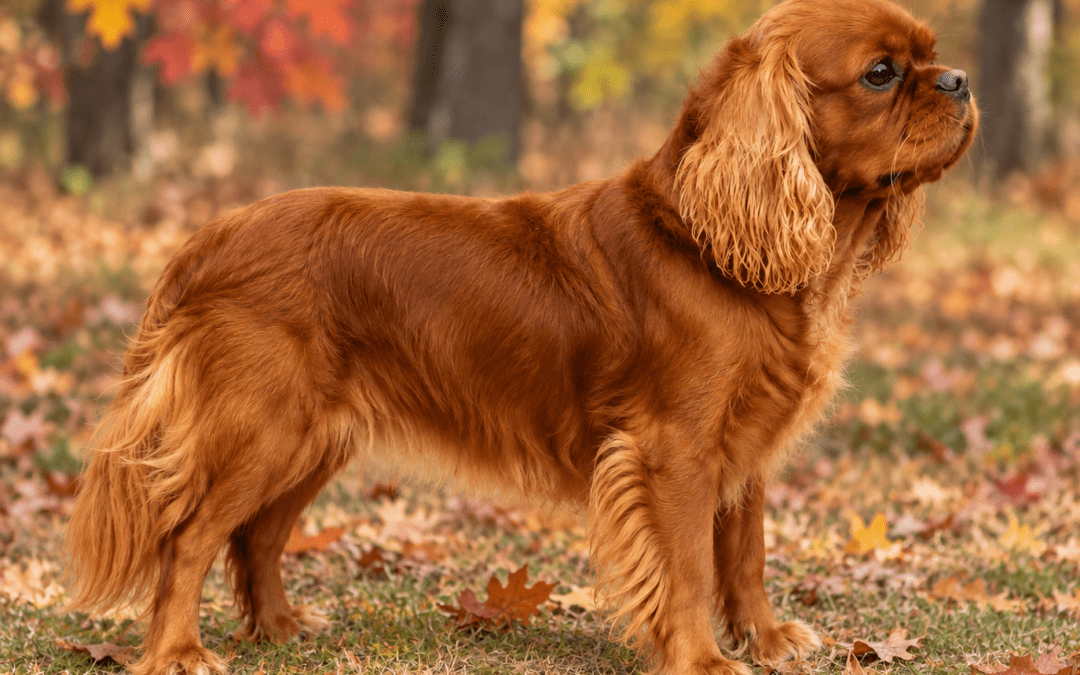
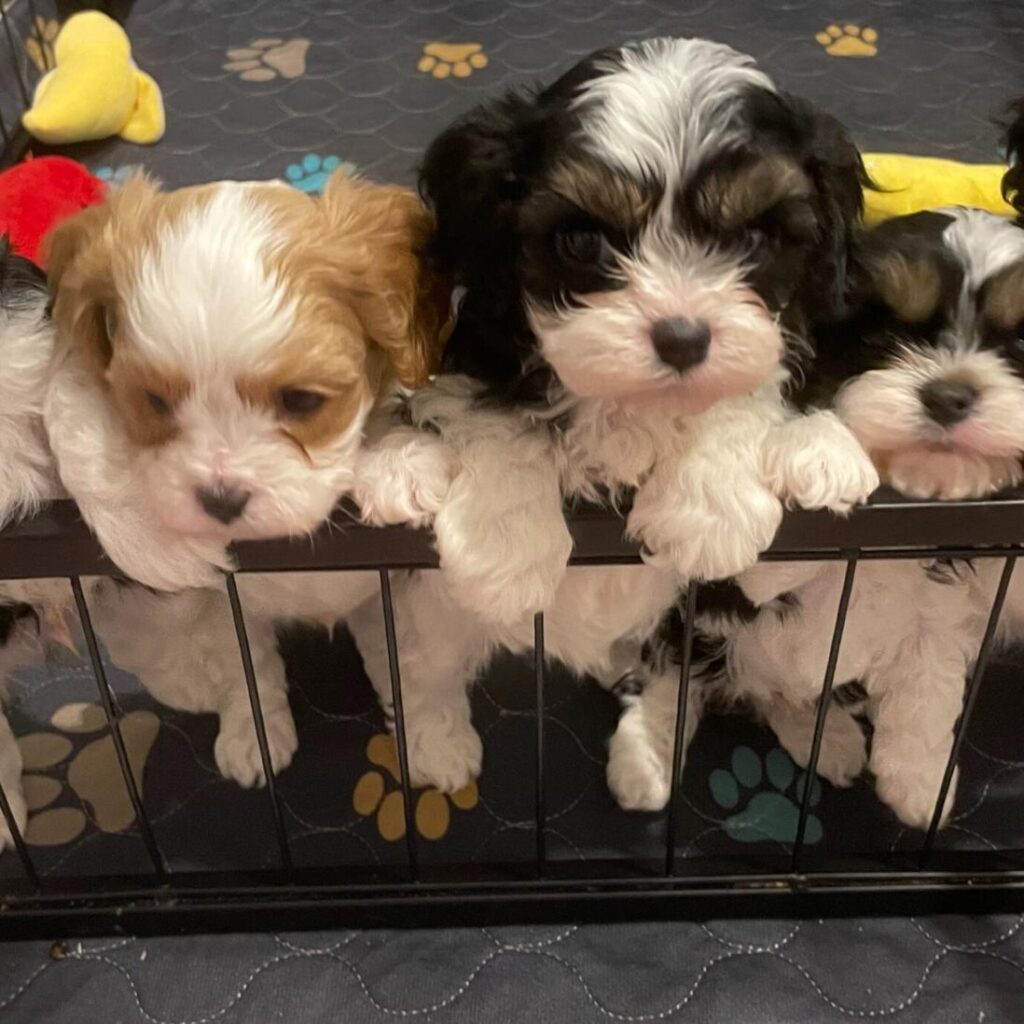
Have you always dreamed of owning a Cavalier King Charles Spaniel, but hesitated because of shedding or concerns about the breed’s health? A thoughtfully bred Cavapoo may offer an appealing alternative.
By crossing a Cavalier with a Poodle, breeders can combine many of the qualities people love about Cavaliers with the potential for a lower-shedding coat and greater genetic diversity.
A first-generation Cavapoo receives approximately half of its DNA from outside the Cavalier gene pool. This can increase genetic diversity and greatly reduce the opportunity for many Cavalier-specific recessive disease variants to occur in two copies, although it does not eliminate all inherited health risks.
Genetically, Cavaliers and Poodles come from very different breed populations and share relatively few of the same breed specific inherited disorders. This can be especially valuable for recessive genetic diseases. If a Cavalier carries a disease causing variant that is not present in the Poodle parent, their puppies cannot inherit two copies of that variant and therefore will not develop that particular recessive condition.
Crossbreeding does not automatically eliminate every health concern, which is why comprehensive disease screening of both parents remains essential. However, carefully planned outcrossing can reduce the risk of certain inherited diseases and increase genetic diversity compared with continually breeding within a small, closely related population.
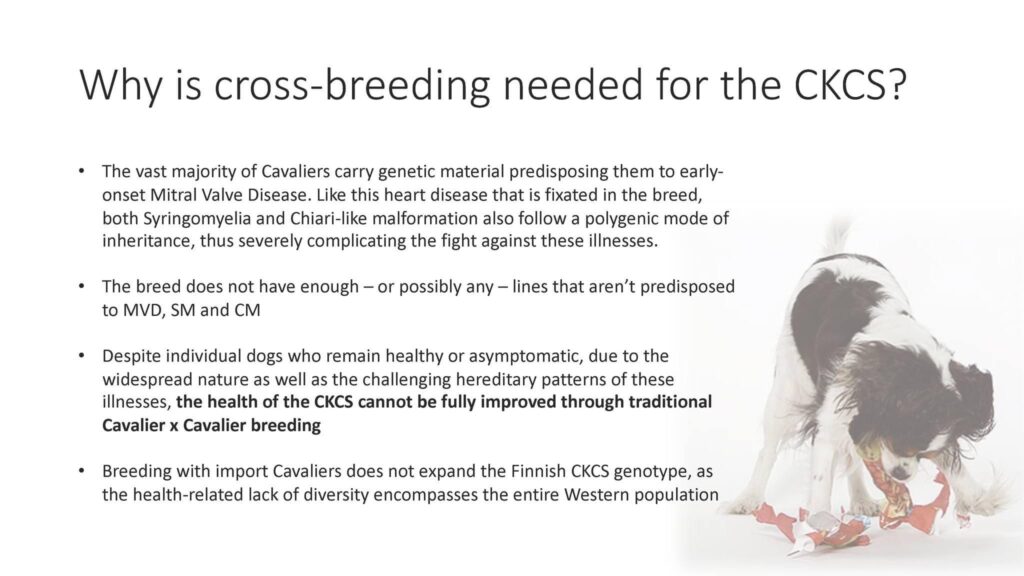
This concept is not unique to Cavapoos. Cavalier health organizations in several countries have explored structured outcross programs as a way to improve the long term health and genetic diversity of the Cavalier King Charles Spaniel. In Finland, for example, a Cavalier improvement program has incorporated approved outside breeds into Cavalier bloodlines, with descendants later bred back toward Cavaliers. Poodles are among the breeds that have been considered for this type of health-focused outcrossing.
The goal is not simply to create a mixed-breed dog. The goal is to use thoughtful breeding, health testing, and genetic diversity to produce healthier generations while preserving the wonderful temperament and characteristics people love about Cavaliers.
Continue reading below to learn more about Cavalier health, genetic diversity, and how carefully planned crossbreeding may help improve the health of future generations.
| Country | Kennel Organization | CKCS Outcross Program | Primary Goal |
|---|---|---|---|
| 🇫🇮 Finland | Finnish Kennel Club | Officially approved | Increase genetic diversity and reduce inherited health problems in Cavaliers. |
| 🇸🇪 Sweden | Swedish Kennel Club (SKK) | Officially approved | Broaden the Cavalier genetic base and improve long-term health. |
| 🇳🇴 Norway | Norwegian Kennel Club (NKK) | Official program | Increase genetic diversity while addressing conditions including SM, CM and MMVD. |
| 🇩🇪 Germany | VDH-affiliated Cavalier King Charles Spaniel Club Deutschland | Controlled outcross program | Introduce new genetic diversity followed by planned backcrossing toward the Cavalier. |
Important: These programs use carefully selected dogs from other breeds to introduce new genetic diversity into Cavalier King Charles Spaniel bloodlines. Descendants are then health tested and bred through subsequent generations toward the Cavalier breed. Finland's approved outcross breeds notably include the Moyen Poodle.
- Finland — Official Finnish Kennel Club, English
- Sweden — Official SKK/Nordic Kennel Union, English / Swedish Kennelclub Central Committee
- Norway — Official Norwegian Kennel Club, English
- Germany — Official CCD source, German
The use of another breed to improve Cavalier health and genetic diversity is not simply a theory. National kennel organizations in Finland, Sweden and Norway have established structured Cavalier outcross programs in which carefully selected dogs from other breeds are introduced into Cavalier bloodlines. Germany has also begun a controlled outcross program through its VDH-affiliated Cavalier breed club.
The goal of these programs is to introduce genetic diversity, reduce the frequency of serious inherited health problems, and then carefully breed subsequent generations back toward the Cavalier King Charles Spaniel.
Of particular interest to Cavapoo families, the medium size, Moyen Poodle is one of the breeds approved for use in Finland's Cavalier outcross project. This does not mean that a Cavapoo and an official kennel-club outcross dog are the same thing. It does, however, demonstrate that introducing Poodle genetics into Cavalier bloodlines has been recognized as one potential tool for increasing genetic diversity in the breed.
Why Can Crossing a Cavalier With Another Breed Improve Health?
The Cavalier King Charles Spaniel is loved for good reason. They are affectionate, gentle, people-oriented dogs with wonderful temperaments. Unfortunately, the breed also carries an unusually heavy burden of inherited health problems.
The reason is not that Cavaliers are simply “badly bred.” The problem is much bigger than any one breeder or bloodline. It involves the genetic diversity of the entire breed.
Think of a breed as a genetic library
Every dog has thousands of genes inherited from its parents. A healthy population needs lots of different versions of those genes.
Imagine that a breed's genetics are a huge library. The more different books available in that library, the more choices breeders have when trying to avoid harmful genetic combinations.
Over generations, purebred dogs are bred only to other dogs within the same closed population. In a breed with a limited gene pool, many dogs eventually carry some of the same inherited genetic weaknesses.
The Cavalier is an especially important example. Genetic research has described the breed as having undergone a severe genetic bottleneck, meaning much of its original genetic variation has been lost. Researchers examining whole genomes have also found an unusually high burden of potentially harmful genetic variants in Cavaliers compared with most of the other breeds studied.
The problem becomes very difficult to solve through traditional breeding alone.
A breeder can choose the healthiest Cavalier available, but that dog is still selecting its genes from essentially the same Cavalier genetic library.
This is why simply finding two healthy Cavaliers cannot fix everything
Good health testing is extremely important, but testing has limitations.
A heart-clear Cavalier can still carry genetic susceptibility for heart disease.
A Cavalier with a normal MRI can still pass genetic factors associated with Chiari-like malformation or syringomyelia.
A dog that does not personally have a disease may still carry variants associated with diseases found throughout the breed.
That is because many important Cavalier conditions are not controlled by one simple gene that breeders can test for and eliminate. Conditions such as myxomatous mitral valve disease and Chiari-like malformation/syringomyelia have complex inherited components involving multiple genes.
When the same risk factors have become widespread throughout a breed, there may simply not be enough genetic variation remaining to breed away from all of them.
What happens when we breed a Cavalier to a genetically different breed?
Something very important happens.
An F1 puppy receives approximately:
50% of its DNA from the Cavalier
and
50% from the other breed.
Instead of receiving two sets of DNA from within the same relatively restricted Cavalier population, the puppy receives an entire second set of genes from a different population.
That can immediately increase genetic diversity.
Think of it as opening the doors to a second genetic library.
Suddenly there are thousands of genetic variants available that were not circulating within the Cavalier population.
This can be especially powerful for recessive diseases
Some inherited diseases require a puppy to receive the same harmful recessive variant from both parents.
For example, imagine that a Cavalier carries:
Disease gene = d
For a puppy to develop a simple recessive disease, it generally must inherit:
d from Mom + d from Dad = affected puppy
But if the carefully selected dog from the other breed does not carry that disease variant, the puppy cannot receive two copies.
The Cavalier could pass the harmful variant, but the other parent contributes a normal version.
The puppy might become a carrier, but it would not develop that particular recessive genetic disease from two copies of the variant.
This is one reason crossing genetically different populations can be so powerful.
But the benefit goes beyond individual DNA diseases
This is an important distinction.
Cavalier health problems cannot all be solved by simply testing for a handful of known genetic mutations.
Many health conditions involve numerous genes working together.
When dogs repeatedly inherit DNA from within a limited population, they tend to inherit longer sections of identical DNA from both sides of their family tree. This increases homozygosity, meaning the dog receives identical versions of many sections of DNA from both parents.
Introducing an unrelated breed breaks up many of those matching sections.
The F1 puppy now has one Cavalier chromosome paired with a chromosome from a completely different breed population throughout much of its genome.
That greater genetic difference can reduce the chance that harmful variants hidden in the Cavalier population will meet identical copies of themselves.
Why 50% Cavalier genetics can offer such an important opportunity
A first-generation Cavalier cross is not simply a Cavalier with a different appearance.
Genetically, something significant has happened.
Half of that dog's genome has come from outside the closed Cavalier gene pool.
That means a carefully planned F1 cross may have:
Greater genetic diversity
Lower genome-wide homozygosity
Far less opportunity for many Cavalier-specific recessive variants to occur in two copies
A completely new set of genetic variants from the other parent
Potentially lower inherited susceptibility to some complex Cavalier health problems
This does not mean every 50% Cavalier will automatically be healthier than every purebred Cavalier.
It also does not mean that crossing two breeds magically eliminates disease.
The health of the other parent matters enormously.
If the second breed carries its own serious health problems, those risks can also be introduced. This is why responsible crossbreeding still requires extensive health testing, careful pedigree research and thoughtful selection of both parents.
Heart disease is a good example
Cavaliers have an exceptionally high risk for myxomatous mitral valve disease, or MMVD.
This isn't simply a single recessive disease that disappears automatically in a crossbred puppy. MMVD is a complex disease influenced by multiple genes, and Poodles and other breeds can develop MMVD as well.
However, Cavaliers appear to carry a particularly concentrated inherited susceptibility to developing the disease, often at younger ages than other breeds.
Giving a puppy only one Cavalier set of chromosomes instead of two can therefore offer an opportunity to reduce that concentrated Cavalier genetic risk, particularly when the other parent comes from a healthier, genetically different population.
It is an opportunity for risk reduction, not a guarantee of immunity.
This is why kennel clubs are now using outcrossing themselves
The concept of introducing another breed to improve Cavalier health is no longer limited to people breeding companion crossbreeds.
Official kennel organizations in several European countries have established controlled Cavalier outcross programs to introduce additional genetic diversity that is difficult to obtain through selection within the closed Cavalier population alone.
The Finnish Kennel Club explains the principle very clearly: when a breed does not have enough healthy genetic variation available, carefully planned crossbreeding can introduce the diversity needed to improve the population.
Finland's officially approved Cavalier program includes several possible donor breeds, including the Moyen Poodle.
The goal of these programs is eventually to breed the descendants back toward Cavaliers while retaining some of the valuable new genetic diversity introduced by the outside breed.
A Cavapoo is not automatically a healthy dog
This distinction matters.
Simply breeding any Cavalier to any Poodle does not constitute responsible health-focused breeding.
The advantage comes from combining genetic diversity with excellent selection.
Both parents should still be appropriately health tested for the diseases found in their respective breeds. Breeders should choose dogs with strong family health histories and avoid simply assuming that “mixed breed” means healthy.
But when the parents are carefully selected, an F1 Cavalier-Poodle cross has something that no mating between two purebred Cavaliers can provide:
approximately half of its genome comes from completely outside the Cavalier gene pool.
That is why a thoughtfully bred 50% Cavalier dog can have the opportunity for significantly improved genetic health while still retaining many of the wonderful characteristics that make people fall in love with Cavaliers in the first place.
See how these principles are applied in our breeding program, including parent health testing and breed specific screening, on our Safari Doodles Cavapoo puppies in Texas page.
The Science on Cavaliers
- Whole-genome sequencing found Cavaliers were heavily bottlenecked and carried about a 10% higher number of derived alleles at evolutionarily conserved sites than most breeds studied. It also investigated MMVD risk variants. PubMed article
- Studied 1,252 Cavalier records and found substantial heritability for premature mitral valve disease. Data supports Cavalier MMVD has a strong inherited component. PubMed article
- How common/early MMVD is in Cavaliers. 8,860 Cavaliers and 16,887 heart examinations. It demonstrates the breed's strong predisposition to degenerative mitral valve disease. PubMed article
- How widespread CM/SM is within Cavaliers? This study looked at 1,249 scans of 1,020 Cavaliers. CM was present in all dogs in that screened population and SM was present in 39%. Very strong evidence for how entrenched these traits can be in a breed population. PubMed article
Recent Comments