
Flea and tick prevention is important for dogs, but these medications are not completely free of risk. Different products use different active ingredients, and the risks vary depending on the medication and the individual dog.
The FDA has specifically alerted pet owners and veterinarians about the potential for neurological adverse reactions associated with a class of flea and tick drugs called isoxazolines.
The FDA reports that isoxazoline products have been associated with neurological adverse reactions including:
• Muscle tremors
• Ataxia, which means loss of coordination or a wobbly or abnormal gait
• Seizures
The FDA states that seizures have occurred in animals both with and without a previous history of seizures.
At the same time, the FDA considers isoxazoline products safe and effective for the majority of dogs and cats. The purpose of the warning is to make owners and veterinarians aware of the potential neurological reactions so they can consider the individual animal's medical history when choosing parasite prevention.
ISOXAZOLINE FLEA AND TICK MEDICATIONS
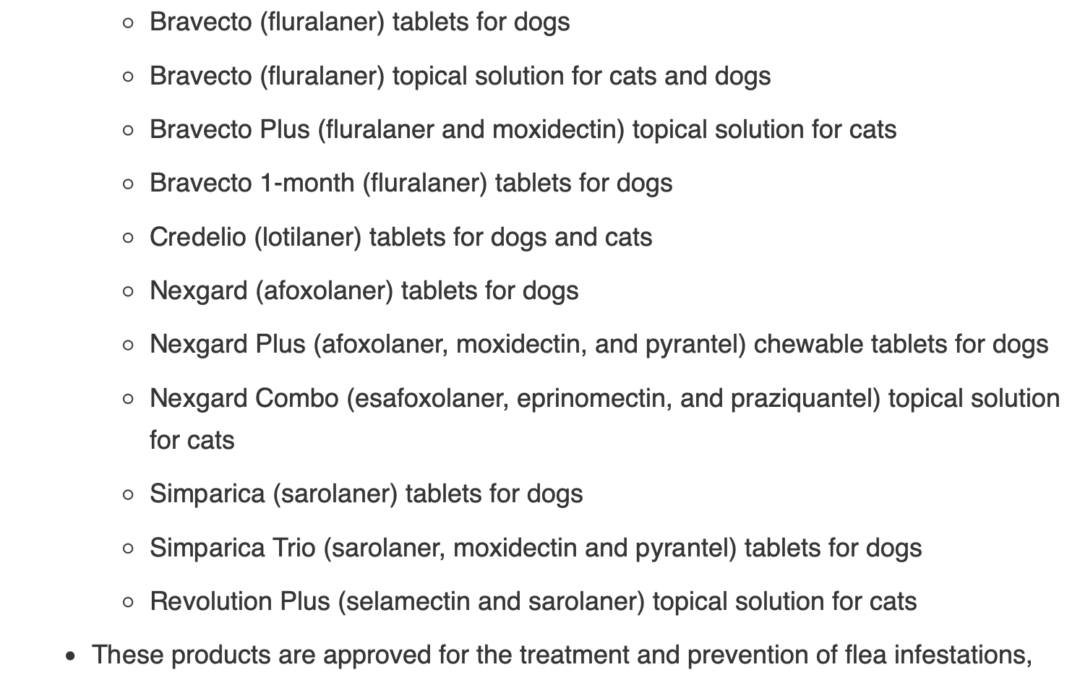
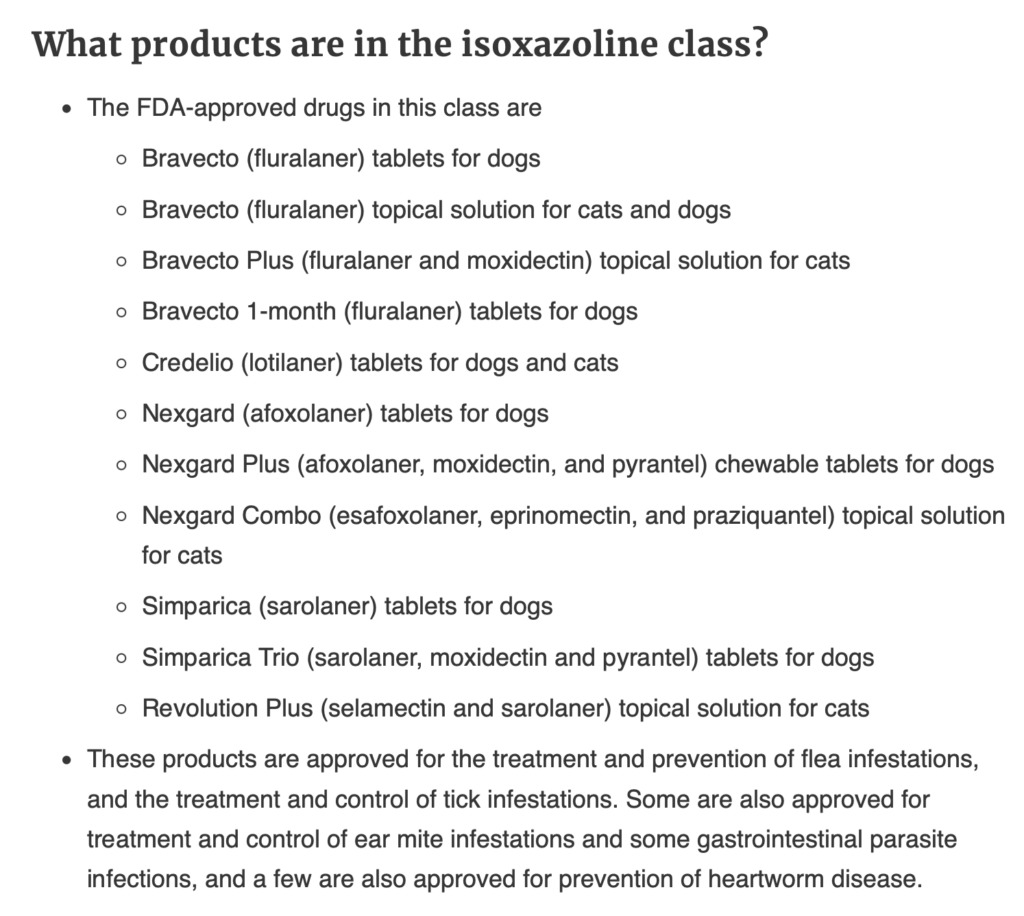
Isoxazolines are antiparasitic drugs used in a number of flea and tick products.
Examples include products containing:
• Fluralaner, including Bravecto products
• Afoxolaner, including NexGard products
• Sarolaner, including Simparica products and Revolution Plus
• Lotilaner, including Credelio products
• Esafoxolaner, including NexGard Combo for cats
Not all isoxazoline products are oral medications. Some are topical, and fluralaner is also available as a long acting injectable product for dogs.
Because products and FDA approvals change over time, owners should check the current FDA information rather than relying on an older product list.
Current FDA information:
https://www.fda.gov/animal-veterinary/animal-health-literacy/fact-sheet-pet-owners-and-veterinarians-about-potential-adverse-events-associated-isoxazoline-flea
WHAT DOES AN ISOXAZOLINE REACTION LOOK LIKE?
The neurological reactions specifically recognized by the FDA include tremors, ataxia and seizures.
Ataxia may cause a dog to appear wobbly, uncoordinated or unstable while walking.
Any dog that develops seizures, tremors, difficulty walking or other significant neurological symptoms should be evaluated by a veterinarian.
FDA safety communication:
https://www.fda.gov/animal-veterinary/cvm-updates/animal-drug-safety-communication-fda-alerts-pet-owners-and-veterinarians-about-potential-neurologic
OUR CLIENTS' EXPERIENCES
Over the years, some owners of our dogs have contacted us after their dogs developed neurological or behavioral problems while receiving oral flea and tick medications. Our opinion is that Doodles are susceptible to reactions to isoxazoline medications.
Owners have described symptoms including:
• Wobbling or difficulty walking
• Dragging the feet
• Trembling
• Appearing disoriented
• Seizures
• Changes in behavior
• Hiding or becoming unusually withdrawn
• Agitation or restlessness
These are reports made to us by individual dog owners. Wobbling or ataxia, tremors and seizures overlap with the neurological adverse reactions specifically recognized by the FDA for isoxazoline medications.
If a dog develops neurological symptoms while taking a flea or tick medication, contact a veterinarian and tell the veterinarian exactly which parasite prevention product the dog has received.
OTHER FLEA PREVENTION OPTIONS
There are flea prevention medications that are not members of the isoxazoline class.
Examples include products containing active ingredients such as:
• Selamectin
• Imidacloprid
• Fipronil
• Permethrin
• Lufenuron
Being outside the isoxazoline class does NOT mean that a medication is risk free or necessarily safer for every dog.
All medications and pesticides can potentially cause adverse reactions. The appropriate product depends on the dog's age, weight, medical history, seizure history, other medications and the parasites that need to be controlled. It is especially important to use dog and cat flea products according to their labels because some ingredients that can be used on dogs can be dangerous to cats.
SPINOSAD
Spinosad is another insecticide used for flea control and is not an isoxazoline.
Comfortis contains spinosad.
FDA post approval adverse event reports for dogs receiving Comfortis include vomiting, lethargy, itching, loss of appetite, diarrhea, seizures, ataxia, trembling, behavioral changes and excessive salivation.
These are adverse events reported after the drug was approved. The FDA specifically cautions that adverse event reporting cannot always establish that the medication caused the event.
FDA safety information:
https://www.fda.gov/animal-veterinary/drug-labels/animal-drug-safety-related-labeling-changes
SERESTO FLEA AND TICK COLLARS
Seresto collars contain the active ingredients imidacloprid and flumethrin and are regulated by the Environmental Protection Agency rather than the FDA.
EPA conducted an extensive review after receiving a large number of incident reports associated with Seresto collars.
From 2012 through 2022, EPA received more than 100,000 incident reports related to Seresto collars. By November 2022, EPA had received more than 2,500 pet death incident reports.
These numbers require an important explanation:
An incident report does NOT establish that the product caused the illness or death.
EPA performed a detailed analysis of reported deaths. Among 1,400 reported deaths occurring from 2016 through 2020, EPA found that many reports lacked enough information to determine the cause of death.
The reported deaths EPA classified as "probably" or "definitely" associated with Seresto involved mechanical strangulation or trauma associated with the collar.
For the other reported deaths, EPA did not identify a probable or definite association between the collar and the death.
EPA also evaluated nonfatal adverse event reports. Reported neurological symptoms included convulsions and ataxia. In some moderate or severe cases, symptoms reportedly improved after the collar was removed, and in some reports symptoms returned when the collar was reapplied.
Following its review, EPA required additional warning language, enhanced reporting of adverse events and additional measures for continued registration of Seresto.
EPA Seresto review:
https://www.epa.gov/pets/seresto-pet-collar-review
WHAT TO DO IF YOUR DOG HAS A REACTION
If your dog develops tremors, seizures, loss of coordination, difficulty walking or another significant reaction after receiving flea or tick prevention, contact your veterinarian.
Tell the veterinarian:
• The exact product used
• The active ingredient if known
• When it was administered
• When the symptoms began
• Any other medications or supplements the dog receives
Suspected adverse reactions to FDA regulated animal drugs can also be reported to the FDA.
FDA information about reporting animal drug side effects:
https://www.fda.gov/animal-veterinary/safety-health/report-problem
DETOXING AFTER A FLEA MEDICATION
Milk thistle, also called silymarin, is sometimes used as a veterinary supplement for liver support. We suggest giving it a try. We also highly suggest you do a cooked or raw pre-made dog food. A dog with any illness should receive superior nutrition.
** A dog experiencing neurological symptoms needs veterinary evaluation rather than relying on a supplement to remove the medication.
FLEA CONTROL IS MORE THAN KILLING ADULT FLEAS
An effective flea control program may also need to address the dog's environment. Adult fleas live on the animal, but flea eggs, larvae and pupae develop in the environment, including bedding, carpeting and other areas where pets spend time.
Under typical household conditions, the flea life cycle can take approximately three to eight weeks, and some flea stages can persist considerably longer. Vacuuming, washing pet bedding and treating all affected pets appropriately can therefore be important components of controlling an infestation.
Merck Veterinary Manual information about flea biology and control:
https://www.merckvetmanual.com/integumentary-system/fleas-and-flea-allergy-dermatitis/fleas-in-dogs-and-cats
THE BOTTOM LINE
Flea and tick medications provide important protection against parasites and the diseases they can transmit, but no medication is completely without risk. The FDA recognizes a potential for neurological adverse reactions with isoxazoline medications, including tremors, ataxia and seizures. At the same time, the FDA considers these medications safe and effective for the majority of dogs and cats.
The best flea and tick prevention is not necessarily the same for every dog.
A dog's medical history, previous reactions, neurological history, geographic parasite exposure and individual risk should all be considered when selecting a product. If your dog has experienced a suspected reaction to a flea or tick medication, discuss that history with your veterinarian before giving another parasite prevention product.
Recent Comments